Posts

Socket weld vs butt weld

Understanding JB Weld Set Time vs Cure Time When it comes to making repairs, JB Weld is a popular choice for bonding and sealing a variety of materials. However, it's important to understand the difference between the set time and cure time of JB Weld in order to ensure that your repair is done correctly and efficiently. Set Time Set time refers to the amount of time it takes for JB Weld to harden to the point where it can be shaped or sanded. This typically takes 4-6 hours at room temperature (70°F). However, the set time can be accelerated by increasing the temperature, or slowed down by decreasing the temperature. Cure Time Cure time, on the other hand, refers to the amount of time it takes for JB Weld to fully cure and reach its maximum strength. This typically takes 15-24 hours at room temperature. However, like set time, cure time can be affected by temperature. Increasing the temperature will accelerate the cure time, while decreasing the temperature will slow it down. It...
Jb weld set time vs cure time

Understanding JB Weld Set Time vs Cure Time When it comes to making repairs, JB Weld is a popular choice for bonding and sealing a variety of materials. However, it's important to understand the difference between the set time and cure time of JB Weld in order to ensure that your repair is done correctly and efficiently. Set Time Set time refers to the amount of time it takes for JB Weld to harden to the point where it can be shaped or sanded. This typically takes 4-6 hours at room temperature (70°F). However, the set time can be accelerated by increasing the temperature, or slowed down by decreasing the temperature. Cure Time Cure time, on the other hand, refers to the amount of time it takes for JB Weld to fully cure and reach its maximum strength. This typically takes 15-24 hours at room temperature. However, like set time, cure time can be affected by temperature. Increasing the temperature will accelerate the cure time, while decreasing the temperature will slow it down. It...

Gas welding vs arc welding

Gas Welding vs Arc Welding Welding is a process that joins two metal pieces together by heating them to a high temperature and applying pressure. There are many different types of welding, each with their own set of advantages and disadvantages. Two popular types of welding are gas welding and arc welding. In this post, we'll take a look at the differences between the two and when you might use each one. Gas Welding Gas welding is a type of welding that uses a flame to heat the metal. The flame is created by mixing oxygen and a fuel gas, such as acetylene or propane. The metal is heated until it reaches a molten state, and then pressure is applied to fuse the two pieces of metal together. One of the biggest advantages of gas welding is that it is relatively inexpensive. The equipment required for gas welding is relatively simple and inexpensive, making it a good choice for those just starting out with welding.  Additionally, gas welding is a good choice for welding thin metal piece...

Cricut design space weld vs attach

Are you new to Cricut design space weld vs attach about the difference between weld and attach? Look no further! Welding and attaching are both useful features that allow you to combine multiple shapes or letters into one single image, but they each have their own unique purpose and usage.  In this article, we will explain the difference between the two and when to use each one to help you get the most out of your Cricut machine Welding is the best option when you want to join two images together permanently. The two images will become one single image, and the original images will be deleted. This is best for logos, monograms, and other designs that need to look seamless. Attaching, on the other hand, is best for when you want to keep the two images separate but still connected. The two images will remain two separate images, but they will be connected by a thin line. This is best for designs that need to have a bit of separation between them, like words or phrases. So when shoul...

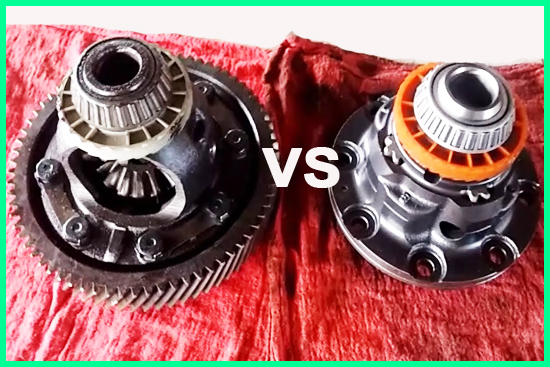
Welded Differential vs Open Differential: Which One is the Life of the Party?

When it comes to vehicle drive trains, the differential is like the life of the party. It allows the wheels on either side of the vehicle to rotate at different speeds, enabling smooth turns. However, not all differentials are created equal. Two popular types of differentials are the welded differential and the open differential. In this blog post, we'll take a closer look at the differences between these two types of differentials and help you decide which one is the life of the party. Welded Differential: The Off-Road Pro Welded differential and an open differential are two different types of differentials used in vehicles. A welded differential is a type of differential that has been permanently "welded" together. This means that the left and right side gears are physically connected, so they always rotate at the same speed. This can be beneficial in certain off-road situations, such as rock crawling, where one wheel may lose traction and start to spin. With a welded d...

Welded Differential vs Limited Slip: Which One is the Cool Kid on the Block?

Image
Welded diff vs limited slip diff A welded differential and a limited slip differential (LSD) are two different types of differentials used in vehicles. A welded differential is a type of differential that has been permanently "welded" together. This means that the left and right side gears are physically connected, so they always rotate at the same speed. This can be beneficial in certain off-road situations, such as rock crawling, where one wheel may lose traction and start to spin. With a welded differential, the other wheel will also spin, which can help to maintain traction and keep the vehicle moving forward. However, this can lead to uneven tire wear and reduced handling on paved roads. A limited slip differential (LSD) is a type of differential that allows the wheels to rotate at different speeds, but it also includes a mechanism that limits the amount of "slip" between the wheels. This can help to maintain traction and improve handling, especially in slippe...

Fillet weld vs groove weld

Image
A fillet weld and a groove weld are both types of welding used to join metal pieces together, but they are used in different situations and have different characteristics. A fillet weld is a triangular-shaped weld that is used to join two metal pieces at a 90-degree angle. It is typically used to join metal plates or sheet metal, and it can be used to join metal of different thicknesses. Fillet welds are relatively easy to make and they do not require a high level of skill. They also have a small throat size and low strength. A groove weld, on the other hand, is a weld that is made in a groove or a channel that has been cut or machined into the metal. Groove welds are used to join metal pieces that fit together closely, such as the edges of two metal plates. They are typically used in heavy-duty welding jobs and are stronger than fillet welds. They also have a larger throat size and are typically more difficult to make than fillet welds. Fillet welds and groove welds are two common typ...